Medical System
Medcards
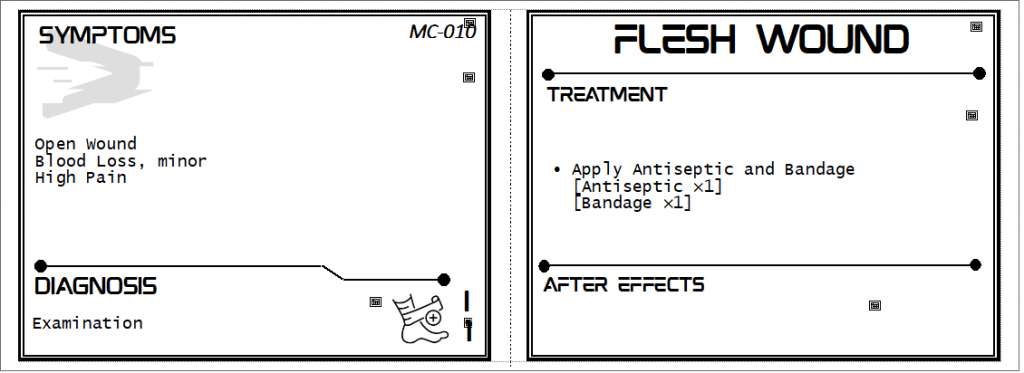
Medical cards (or Medcards) are the means by which a character is afflicted by some medical condition. Medcards may be issued to characters as a result of a number of different gameplay elements, including taking combat damage, interacting with a certain item or person, or exposure to a hazardous environment. These will generally be issued by referees or crew members, but can also be acquired through self-referee game mechanics.
Note that whilst med-cards may be issued in relation to taking ‘a hit’, they are in addition to the hit, and not a replacement of.
Typically, med-cards will feature a combination of roleplay and gameplay mechanical elements, which should be followed by the bearer of the medcard. Note that medcards are not transferable, and ‘ignoring’ a Medcard will be considered cheating.
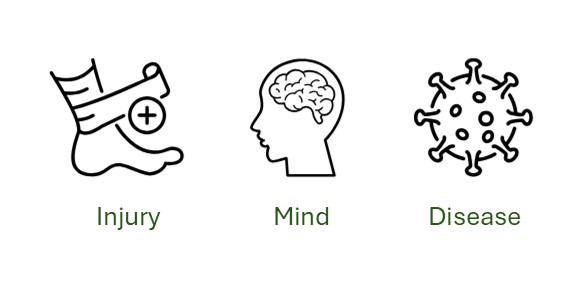
In Drift, there are three common categories of medcard:
- Injury (I)
- Mind (M)
- Disease (D)
In addition to the medcard category, medcards have a corresponding tier, from 1-3. Combined this could make a medcard D2 (Disease Tier 2), or I1 (Injury Tier 1) for instance.
Medcard Phases
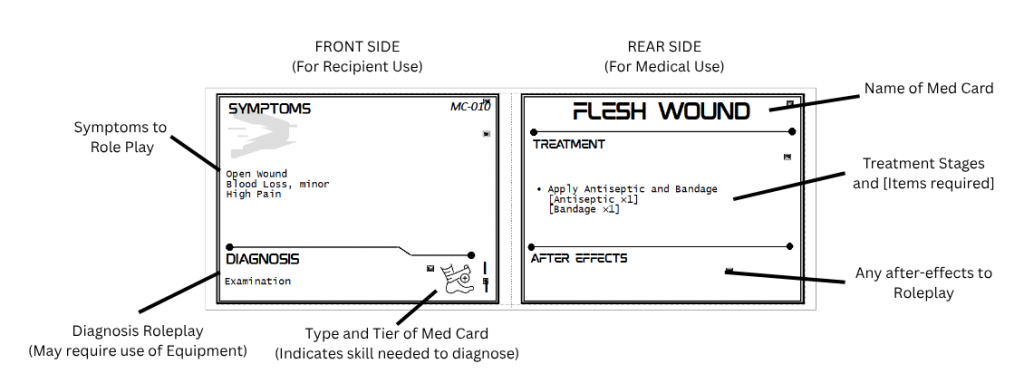
Medcards have four phases of impact on gameplay.
- The Symptoms phase describes roleplay and mechanical symptoms that should be exhibited by the bearer of the medcard.
- The Diagnosis phase consists of any actions that a medic must take in order to accurately diagnose the medcard, and progress to the treatment phase.
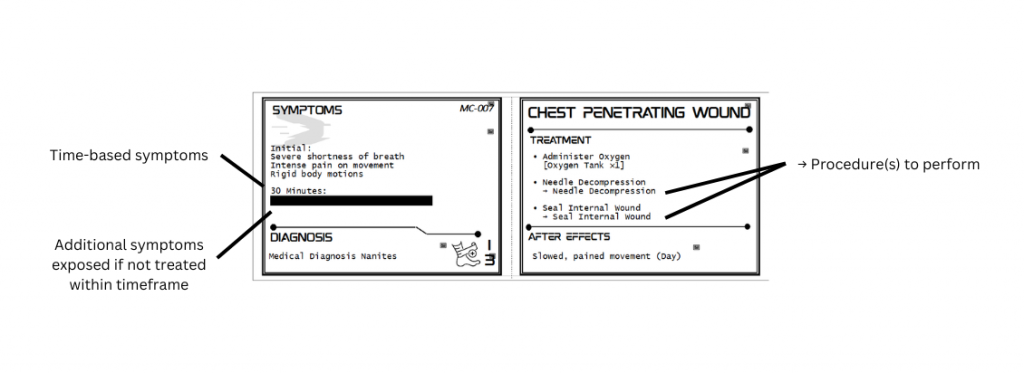
- The Treatment phase is any actions the medic must take to treat the medcard.
- The After-Effects phase is any lingering after-effects that the character will maintain following successful completion of the treatment phase.
Symptoms Phase
Symptoms describe a combination of roleplay and mechanical symptoms that a bearer of a medcard should role exhibit. These may include physical attributes which a medic should be able to observe, or other behaviours. Players should make best effort to roleplay these effects in-character, without direct reference to the wording of the medcard. The intent here is to gain a medics attention in-character; not simply present themselves to a medic and show them the medcard.
Symptoms on medcards may be:
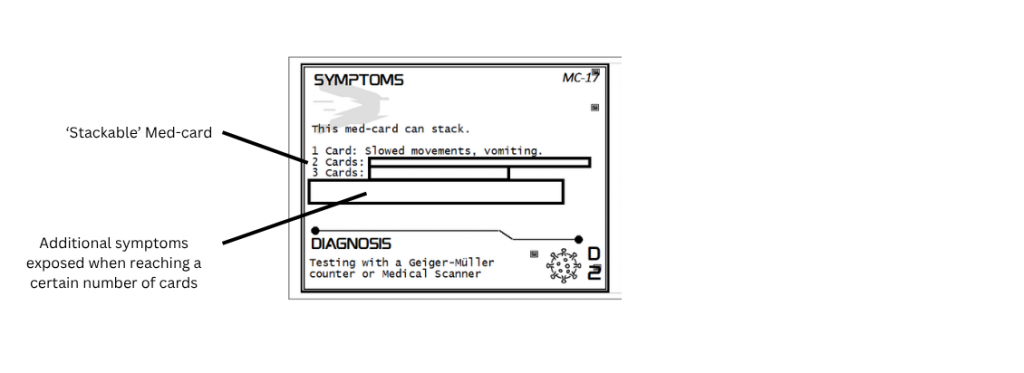
- Fixed (applying immediately on receipt of the med card)
- Timed (progressive symptoms as time goes on)
- Stackable (additional symptoms unlock as more of the same med-card are collected and remain untreated)
Note that some treatment options will state “prevents symptom progression”. In this case, after the application of that treatment, the symptoms will cease progression – although any already present symptoms will be maintained.
Diagnosis Phase
The Diagnosis phase is the phase in which an appropriately skilled medic is able to undertake actions to accurately diagnose the extent of the medcard, and determine a course of treatment.
After suitable role play with a medic, the bearer should present the medcard to the medic, who will determine based on their skills and the category and tier of the medcard, whether they have the necessary skill to diagnose the condition – indicated by the category and Tier (eg. D2) as follows:
- Tier 1 Medcards can be diagnosed by someone with the First Aid skill (and any equipment requirements listed)
- Tier 2 Medcards can be diagnosed by someone with the Physician skill (and any equipment requirements listed)
- Tier 3 Medcards are diagnosed as follows:
- Mind – Neurologist
- Injury – Surgeon
- Disease – Epidemiologist
If a medic does not have the necessary skill, they may refer to another medic who might. For instance, a character presents with a Disease tier 2 (D2) card – a combat surgeon (with only the First Aid skill) may not have the necessary skill to recognise a D2 card, but could refer to a Physician who might. Again, the intent here is that players role-play this to the best of their ability.
Following diagnosis of the medcard by an appropriately skilled character, the medcard can be turned over by the medic to reveal the treatment plan.
Treatment Phase
The treatment phase is the phase in which the medcard is treated. Typically, the treatment phase will consist of a mix of roleplay, and the usage of resources or equipment. Consumed resources are identified on the medcard with square braces, eg. [Bandage].
Some medcards feature one or more ‘Procedures’ to be performed. Procedures are a more complex set of treatment steps, which are commonly known to medical personnel with the required skills. Typically, procedures will require additional resources, equipment and roleplay. The requirements for procedures are defined in the Medical Database, which will be freely available to players for reference during gameplay. During gameplay, characters may discover or create additional procedures. Some example procedures include:
- Procedure: Sealing of internal wound
- Procedure: Cybernetics installation
- Procedure: Neurosurgery
Some med cards might offer different treatment paths, which may have different outcomes.
In some cases, characters may wish to attempt to treat a medcard with alternative resources, modified methods or improvised environments. In these instances, a referee must be made aware in order that they may determine the outcome.
After-Effects
Following treatment, many medcards will feature after-effects. These effects may consist of role play or mechanical effects, and like symptoms, should be adhered to to the best of the player ability. Typically these after-effects have limited durations, that could be minutes, hours, to end-of-day, or end-of-event.
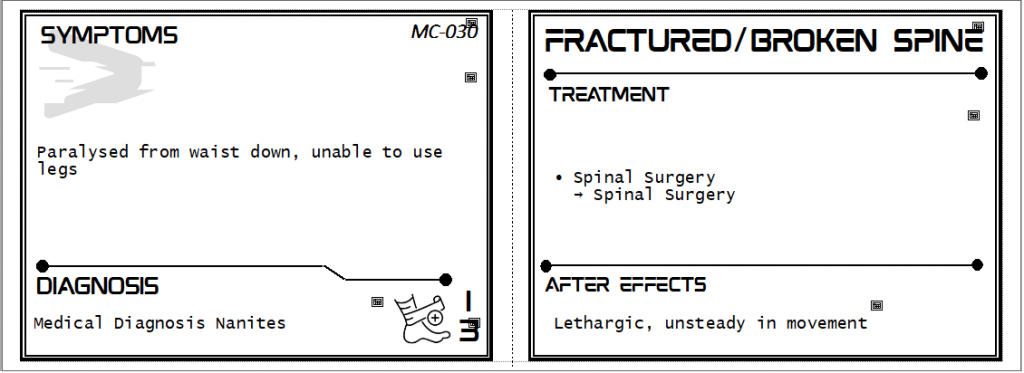
Note that some after-effects may be permanent – although this doesn’t mean that they couldn’t be mitigated or resolved through other game play mechanics!
Following the expiration of any after-effects, the medcard should be returned to a referee.